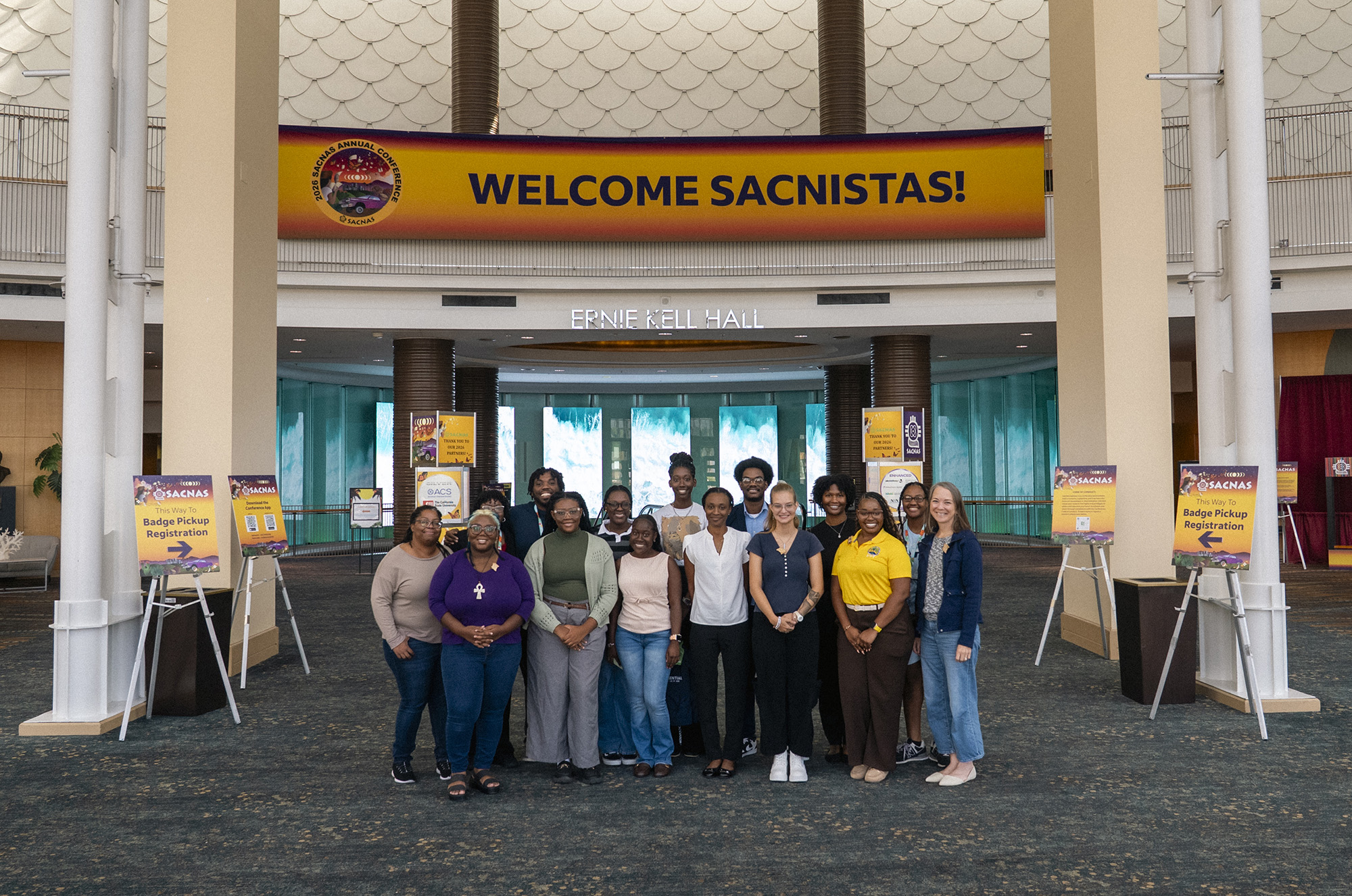
Students from the University of the Virgin Islands (UVI) gained valuable exposure to the national scientific community when they participated in the 2026 SACNAS Annual Conference, held Oct. 29–31 in Long Beach, California.
The annual conference is hosted by the Society for Advancement of Chicanos/Hispanics and Native Americans in Science (SACNAS), an organization dedicated to advancing diversity and inclusion in science, technology, engineering and mathematics (STEM).
The conference brought together aspiring scientists, researchers and industry professionals from across the country, providing UVI students with opportunities to share research, explore career pathways and build professional connections that could help shape their futures in marine and environmental science.
UVI undergraduate student Aaliyah Yarde described the experience as both inspiring and empowering. “SACNAS reminds me that our backgrounds and experiences make us unique and stronger together,” Yarde said. “I’m proud to be a part of a community that inspires us to dream big and break barriers.”
For Alexandria Tennant, a student in UVI's Master of Marine and Environmental Science program, the conference was an opportunity to share her passion for marine science with a broader audience and take another step toward achieving her career goals. “It was an amazing experience to share my research with a variety of cultures!” Tennant said. “I aim to travel the world doing marine science and presenting to people from around the world and this conference helped me to feel one step closer to achieving that goal!”
The UVI delegation was among 108 students, workforce fellows, mentors and researchers from the U.S. Virgin Islands, Puerto Rico and Guam who attended the conference through Navigating Home, a U.S. National Science Foundation-funded alliance that supports emerging scientists from the three territories.
The delegation included 15 participants from the U.S. Virgin Islands, 26 from Puerto Rico and 67 from Guam. Together, participants shared 15 research presentations and posters, highlighting scientific work taking place across the island regions. UVI graduate student Alexandria Tennant presented her master's student research that connects to the U.S. National Science Foundation-funded Virgin Islands Center for Autonomous Research (VICAR), which is using remotely operated, underwater vehicles to understand changes happening to U.S. Virgin Islands coral reefs.
Beyond showcasing research, the conference offered participants professional development sessions, an academic and career expo, and opportunities to connect with established scientists, potential mentors and peers who share their interests. For UVI students, these experiences provide valuable exposure to scientific careers and opportunities for graduate study, while helping them build the confidence and professional networks needed to succeed in competitive fields.
Mentorship is also a central component of the Navigating Home program. UVI alumna Zola Roper, a staff member of UVI's Center for Marine and Environmental Studies and a Navigating Home mentor, emphasized the value of supporting students as they navigate their academic and professional journeys. “The access to mentorship, insights, and resources has been especially meaningful, allowing me to continue growing while also strengthening my connections with the students I mentor,” Roper said.
Through fellowships, mentorship and partnerships with local organizations, Navigating Home helps students and recent graduates gain practical experience in marine and environmental science while creating pathways to careers in their home territories. The initiative also connects emerging scientists from geographically distant island communities, encouraging collaboration and the exchange of ideas on environmental challenges facing their regions.
UVI's participation in the conference also included representatives of the University's Virgin Islands Center for Autonomous Research and Coastlines & People Strong Coasts project, both supported by the National Science Foundation, as well as individuals supported by the Alfred P. Sloan Foundation.
For more information about the Navigating Home program, visit www.navigatinghomeproject.com.