The University of the Virgin Islands (UVI) is redefining how science engages local communities through the STEM Ambassador Program (STEMAP), a partnership with the University of Utah and UVI’s Navigating Home program, funded by the U.S. National Science Foundation. Together, these initiatives are equipping scientists, fellows and community partners with tools to deepen trust, inspire youth and strengthen ties between research and the people it serves.
The STEMAP program challenges early-career scientists to design community engagement projects that are built around the needs, values and interests of a community. The program's approach is grounded in what its founders call conscious science communication: a practice that asks scientists to examine not just what they are communicating, but how, to whom and why.
That shift is timely. While public trust in science is high, engagement with it is low, and the traditional "top-down" model of science outreach where experts speak and the community listens, has increasingly been identified as part of the problem. STEMAP's model inverts that dynamic, asking scientists to connect with their communities first, and then to design engagement that empowers people to form their own connections to scientific ideas rather than simply absorbing the researcher's conclusions.
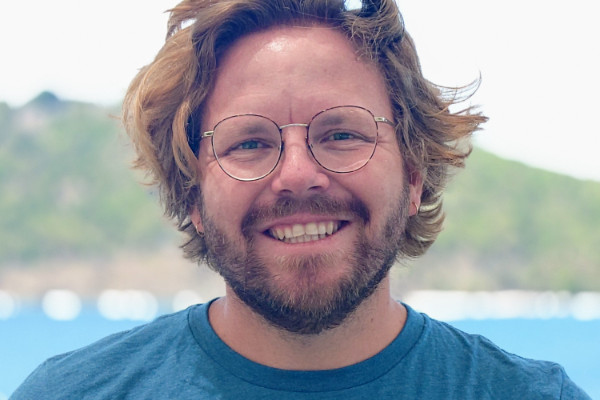
"Instead of going to a group and just talking at them, it encourages us to understand the group, integrate with them, and encourage independent learning without pushing our own narrative," said Dr. Stephan Bitterwolf, a UVI Navigating Home Workforce Fellow whose STEMAP project focuses on sea urchin restoration in partnership with the Water Island Civic Association. "I'm passionate about restoring our degraded reefs, and this program is teaching me how to lend my expertise so community members can form their own bonds with these topics in ways they are most receptive to."
The 2026 Navigating Home STEMAP participants include five USVI fellows working on projects that span reef ecology, environmental education and marine science curriculum development across St. Thomas and the broader USVI. The four-month program included travel to Puerto Rico on June 4, for an in-person training with program facilitators and additional participants from Puerto Rico.
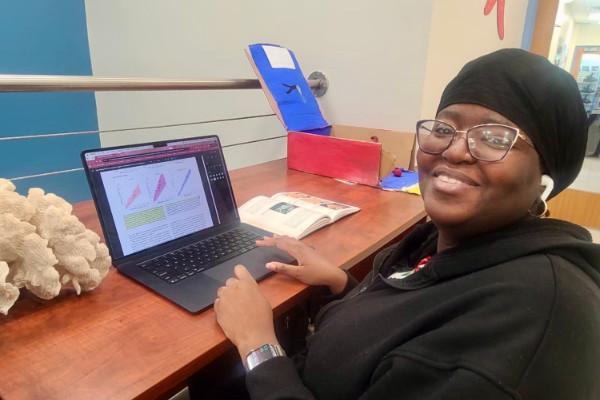
Maura Richardson, a 2026 graduate of UVI with a bachelor's degree in marine biology, is collaborating with the Virgin Islands Department of Education and science teachers from two St. Thomas public high schools to restructure Marine Biology and Environmental Science curricula to make them more hands-on, locally grounded and student-centered. She describes a training exercise at last week's in-person meeting in Puerto Rico that put the program's philosophy into practice.
"We were challenged to explain scientific concepts without relying on overly technical language," Richardson said. "It reinforced the importance of building connections between scientists and communities and ensuring that scientific knowledge can be understood and appreciated by everyone." Richardson, who grew up in the Virgin Islands, sees her work as a bridge: "I believe that science has the power to connect people, inspire curiosity, and create meaningful change, especially when it is rooted in local experiences and community needs."
Other fellows in the 2026 cohort are similarly inspired to be thoughtful in their engagement with their focal groups. UVI Navigating Home Workforce Fellow Alanica Canonier is developing interactive reef science activities for summer camps and youth groups, highlighting the connection between island life and the marine ecosystems that sustain it. Focusing on the tourism sector, UVI Navigating Home Workforce Fellow Jan-Alexis Barry is working to increase coral reef awareness among beach resort staff, who often serve as visitors' first point of contact and trusted local guides. Meanwhile, UVI Navigating Home Workforce Fellow Helen Ratchford is partnering with the VI Children's Museum to create hands-on, multigenerational experiences that help families weave science into their everyday lives.
"Many of us call the Caribbean our home, and the reefs we have here are a part of what makes this place our home," Barry said. "We should take care of them the same way."
That sense of belonging runs through the cohort's work. These scientists are community members first, experts second. Bitterwolf frames it plainly: "Our coral reefs are going through devastating changes that are often invisible to those who aren't regularly engaging with them. Science engagement matters because it bridges the gap between research and the community, empowering residents to be active stewards of their shores."
About the STEM Ambassador Program
STEMAP is a training program based at the University of Utah's Graduate School that prepares scientists for meaningful public engagement outside traditional education settings. Its mission is to build relationships and facilitate open-minded exchange between scientists and the public, with an emphasis on equity, access and community-centered engagement. The program has trained more than 250 scientists and partnered with over 100 organizations across the United States and U.S. territories, including the University of the Virgin Islands. STEMAP is supported by National Science Foundation Awards DRL-1514494 and 1906408. Learn more at stemap.utah.edu.
Learn more about Navigating Home at www.navigatinghomeproject.com.
For more information, contact Elisabeth Leerdam, SEAS Islands Alliance Program Coordinator at elisabeth.leerdam@uvi.edu.